whatever and whatever else

I don’t know why I wrote this, dear reader. Maybe I’m hurting–or something far less dramatic.

I liked the idea of becoming wind–to exist only secondarily. To become the movement of something else, instead of the something else that moves.

Whatever the reason, I wrote this. It means an awful lot to me.


runny egg


I.


it doesn’t confuse me as it should 

music, poetry. writing from the I

the life I’ve chosen 

to soften my skin the bits

of hair I regard above others and less

than some curled

in fistfulls and cradled on the backs

of necks 

more than–or

perhaps just less than lovers I wish for

confusion–to not know 

the end with conviction enough

to wait for it

god knows I’ll wait in

pretty agony with skin 

wet with some small call to purity

for thumb to press to palm to again

and finally

be unknown to these


I know I will be known 

as one undainty indiscretion having 

required my voice–small and

slurred “I want nothing 

more 

than this palm. this thumb. to press 

down.” to not know and not know

to purge 

the cold

the certain from the body. this feeling

chosen or otherwise by two 

crepuscular dawns

who can do nothing–can wait 

for time to move


II.


guilt and wishing both 

indulgent touching myself 

in anticipation of the waiting it isn’t nice 

to know

fear–a selfish habit in my hand

soft and wrong and cradled

inside myself. I hate the thought. time

owes me nothing 

a dawn

with empty palm and hair full of fingers

I think I will jump.

shock the evil and certain both–a

third more submissive 

path. to die 

having nothing to say at all

about the knowing.

I will go with time

we will laugh 

at certain minds waiting

for us to move 

for them. fidgeting 

nervous–knowing the end

is embedded there 

in the start


III.


time and I grow older

but never old. this is the hand I’ll 

hold we will be wind–

being only because something else

moves.

when the air is still we will

be gone. 

death and knowing

are not equal certainties. one

is equalizing–neither place

it requires no waiting (if one is proactive)

like bath water warm and

uterine while the other is 

agony. inequity. suspension

knee deep and ice cold it cuts

the wrists.

but to jump is sweet and

cean of knowing 

atoms 

of home


IV.


wistful again. even now searching 

for the backs of necks–the 

wholeness of a water glass full

and cold

a man. loud shoes. I will

blow in this direction. not quite there

but very much a part of it all. Please

hold out a hand palm up

so I can sit–can rest

on all that I’ve given up


V.


I wonder then

with all I am

and none of what I 

was, why we chose

feet

instead of this

funny wind 

always there–all

at once and none

at all just a 

child

not knowing what

it does and having

at once–all of it 


VI.


Oh and I must

go

but if you could–

hold–please hold

a hand to catch

music, poetry, writing

from the I. skin

soft 

as a breeze.

I must go.


Infinite love, dear reader.

Rest up.

Humble Pie


This is a story from my past, dear reader. One I look back on with pain and attempts at gratitude. It is heavy and sad and very much a part of my story. It took a long–a very long time–to write.

Be kind to each other, sweet reader. Read if you wanna go deep, deep into your feelings.

Humble Pie

On this Thursday morning, there were no shouts of defiance when the clocks struck 6. It was eerily silent, save only for the steady breathing of a neighbor–the shuffle of a nurse’s feet. It was a holiday, so the temporary residents of the third floor were awarded the privilege of sleeping in. 

When they finally rose, they did so as ghosts–pushing aside white sheets and white knitted blankets, opening the doors of white rooms to walk down white hallways. With eyes glazed from sleep and sedatives, some showered, some paced, some stared at the spaces between things. Those who remembered wished each other a happy Thanksgiving. Those who had forgotten gave a soft good morning, or spoke only to the noise inside themselves. All were glum. All wished they could be somewhere they were not. 

The third floor of the C.H. Medical Center is a psychiatric ward. Here, those who are a danger to themselves or others are taken to stabilize–some willingly, some by threat of force. They are essentially stripped of their right to freedom; their confinement ends only with a psychiatrist’s signature. 

At Eight-thirty, they shuffled together from the “night side” where they slept, to the “day side” where they would spend the next fourteen hours. The day side is split into three small areas: the dining section, the television section, and the activity section. Here, patients picked the most comfortable patch of space they could find, and perched protectively. 

Breakfast was set out on two round tables in the dining section. Small, blueberry muffins, cereal, and cartons of milk were picked over quickly. A few oranges and a single green apple sat in a large bowl, untouched. Spoons were signed out, and promptly returned upon the meal’s completion–they were a liability. The coffee was not coffee but murky, decaffeinated water, and yet they drank it in big, full gulps, clinging to imitation normalcy. 

When stomachs were full of Frosted Flakes and decaf’s sweet placebo, a community meeting began. Each patient was asked to set a goal for the day, and though many chose not to speak, others made an attempt at optimism. “To have a good day” was among the most common responses–a goal as difficult to accomplish as it was simple to say. It was always met with kind, sympathetic eyes, or a gentle nod of agreement. 

After breakfast, each patient was taken to speak to their assigned psychiatrist, who hid with a clipboard and unchecked freedom behind one of several locked doors. There were three psychiatrists employed by the unit, but on Thanksgiving, there was only Dr. V. A no-nonsense, graying, Peruvian man controlled the freedom of thirty psychiatric patients–not one of them had ever seen him smile. He spoke quickly of medication changes he had or was planning to make. Zoloft from fifty to one hundred, the addition of Seroquel, the necessity of Ativan–this was his language–these were his weapons. Patients had precious few moments with him–maybe five if they asked questions that required more than a yes or no. This time was largely spent attempting to convince him of their stability. “Yes, I am feeling much better,” They would say. “No, I do not feel at all panicked.” They would smile. Even if these were lies, they were delivered with as much sincerity as they could muster. They all wanted out as soon as possible, and Thanksgiving gave their performances even further motivation.

One of those hoping for a signature was sweet, sixty year old R. She moved slowly, even with the aid of a walker. It squeaked loudly from a loose wheel, but she didn’t seem to mind; she paced back and forth across the dining section floor, waiting for her turn with Dr. V. 

R had given birth to three children–two girls and a boy–who she was convinced had inherited her traumatic past. She had been beaten, emotionally starved and belittled by her father, yet she herself had been severed from her children’s lives for more than a decade. Though her daughter did reach out during her stay on the third floor, it was only to tell her that she had brought all ten of R’s cats to a shelter. She was devastated. R had not seen her other daughter or son in years. She was legally stripped of visitation rights, and encouraged by their father to stay as far away as possible. She was an alcoholic and an addict, and her family wanted none of her struggle.

R had worked as a nurse in her thirties and forties, but found it increasingly difficult to focus on patients while consuming only bags of pistachios and cheap, clear liquor. She stopped working, and fell further into her addictions–further from her family. Though she had a few friends, ten cats, and a small lap dog who she committed her entire heart to, she was lonely. Though she longed for her release, on the third floor she was not alone. The third floor was a quiet, sober place for her to rest, and here she spoke freely. R told her companions heartbreaking stories of her past, taking great pains in describing every detail of the day she “met” her son. She had driven in circles for hours, unsure which house was his. She saw a tall man with dark hair sitting on the stoop of an old, white house. She rolled down her window. Not knowing it was him, R asked her son for directions. They embraced–but only briefly. It had been more than a decade. 

R was released at twelve PM on Thanksgiving day. 

R’s story is one of thousands that have paced the third floor; her struggle is one universally shared. This was not a happy place–not a sanctuary of healing. Though necessary, it felt much like hopelessness. Here, people were lost to themselves. 

At twelve-thirty, the pacing stopped; a thanksgiving meal was to be served. Turkey, cranberries, mashed potatoes and gravy sat beside cartons of milk and salt packets. Those not on specialized diets were given small cups of pumpkin pie. Most ate quickly, hungrily, not used to such decadent food. A few words of thanks were muttered between bites, but the air was too heavy to hold much conversation. The knowledge of their shared reality was too much to speak about, so they kept to themselves as they tried to cut their meat without knives. They kept to themselves as they thought of loved ones they missed. 

A woman in a wheelchair smiled encouragingly at a girl with big eyes and hollow cheeks. The girl took a small bite of turkey, and returned the smile sadly. “You are my sunshine.” I didn’t know her, but I cried with her that day.

The battles waged on the third floor are fought within–they do not end with a patient’s release, but follow them through the double doors and onto the streets. Here, there are human beings hurting. They survive bipolar disorder. Depression. Schizophrenia, anorexia, bulimia.  All of this is true, and yet, here there are human beings giving thanks. Here too, they want only to sit beside someone–to share their love.

Think about these people sometimes, dear reader. We are still there on days like this–on days of celebration and sadness both. I have long been under my own power. I am doing well, and with this I promise to help those who aren’t.

I love you.

Pretty Math

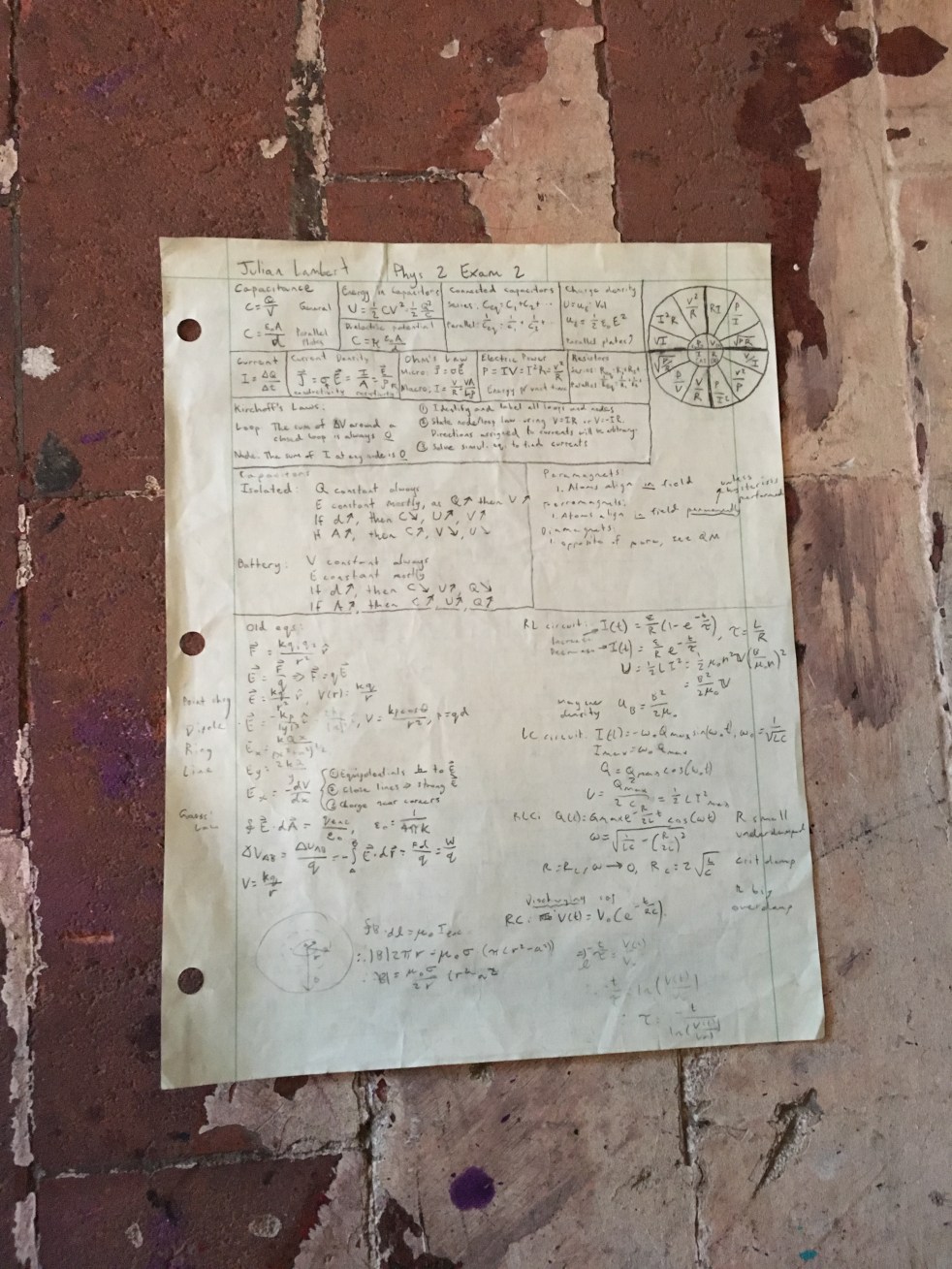
Hear me out, dear reader. Math is pretty.

The best math reads a bit like a musical composition–there are movements. There are lovely moments of relative calm taking shape in rows of zeros. There are moments of chaos also–tiny equations etched urgently. Straight lines and arrows conduct the viewer–moving us forward through impossibility. My favorite kind of math looks like Chopin reimagined; intricate, quick etudes and long, lilting melodies.

Though this sounds sentimental, it really isn’t. The concepts explained on a page of tireless calculation have the same foundations as the concepts great composers use when writing music; what sounds good–what feels good–and why things move the way they do.

Maybe it’s the forced isolation–but either way–I’ve found myself writing a lot of parallels between math and religion. And the ceremonial aspects of sitting down with these huuuuge concepts of life and our reality and working them out. 

Artists in every medium do this–painters on canvas and sculptors with clay–writers with words and overly emotional metaphors (of which I am super guilty.) Mathematicians do this through calculation–through understanding and recording numbers and shapes.

Here’s my favorite bit of prosey poetry in this genre which, and i promise this is real, is called Quantum Poetics.


To Be Poised 


The beauty of ceremony is kept here–a laborious process and the knowledge of why it’s real. Closer to worship than any baptismal kneeling or nodding, it’s here. The holy exists without our consent–material and maternal–hidden to the mind only temporarily, and never to the body. See, we live inside it, too. 

The beauty of ceremony is lost in what is done for its own sake. A number carried over is not knowledge but empty practice. We move in self-absorbed limitation. Refusing depth outright, or perhaps it’s in conditioning. We aren’t blind, but selective–searching for convenience and salvation both. 

The pain of knowing why, of having more questions than possible answers. Of pressing on in spite of this. This is the lovely cut of understanding, which is, if honored, called God. 


I love you, dear reader.

That adds up.

Here’s to Dreams: This One’s Mine

I want to write children’s stories, dear reader.

WHAT? Yes, I know. I am a bit raunchy and a bit–well a lot–chaotic. But hey, this is my dream.

It’s important to me that children are exposed to good literature–too often they are fed garbage. Their spongy synapses take in everything, but very little of the media made for children is worth holding on to. I want what they choose to remember–what they put in their pockets for safekeeping–to be important.

I want them to feel less alone.

As a kid, I was afraid of the world. I was scared into silence by nearly every social encounter, potential failure and inevitable rejection. Eventually, I stopped trying new things all together.

I was even afraid to make friends–to exist in the world in the ways I wanted to–because I was just so scared.

With the story I am about to share with you, dear reader, I wanted to say that being alone is a beautiful thing. You discover so much about yourself and the world in these moments. That being said, being alone with one’s silence out of fear is endlessly limiting.

So here’s something little Al needed: a children’s story. To borrow or to keep.

Stories for adults are contrived anyway.


Silence and The Girl


The girl found that the older she became, the more time she spent alone. She missed her friends and family terribly–wishing she could be with them, but knowing that she had only two feet. The girl couldn’t fly unfortunately, and so she often found herself in the absent company of Loneliness.

One April evening, when the birds were settling on their branches and the sun was too low to keep her warm, she found herself alone again.

As the minutes passed, the cold breath of loneliness made itself at home in her throat. She felt as if she might cry, but pinched the soft skin of her wrist and reminded herself to be tough. She was alone, though–more now than ever.

And so she let the tears come, and they came and came. For a very long time, the girl cried with Loneliness, who offered her no comfort. She thought she might give up–that she might leave so Loneliness wouldn’t be able to find her. She could run and hide and leave this place where she felt so much pain.

Before she resolved to leave–before she packed her bags–the girl felt a soft hand on her shoulder. She turned to see a kind face.

“Who are you?” asked the girl.

“I am Silence.” 

“Why have you come here?” The girl was scared, but the hand on her shoulder was soft and warm. It felt familiar.

“You are here–alone–and that is where I choose to live. I thought we could sit together a while.”

“I’d like that.” said the girl, smiling.

And so the girl sat with Silence. 

Every evening, Silence would return to sit at the foot of her bed, and the girl no longer felt Lonely. Silence told her of the world and of space; of who she might like to be and how she might like to fall in love. 

The girl thought it must be very beautiful to be in love, and so she spoke of it with Silence often. She could imagine nothing better than sharing Love’s company with someone she’d meet one day.

“I’ll never be Lonely.” the girl said happily.

Silence spoke to this, “It is beautiful, yes. But Love doesn’t mean one is never alone.” 

 This scared the girl.

“Promise you’ll never leave me, Silence. That you’ll always stay with me.”

“I promise that when you need me, I will always be there.” 

The girl smiled and closed her eyes. She slept wrapped in soft, warm arms, and felt safe. 

Each morning, the girl found herself anxious for Silence to return. She longed for the safety she felt at night–the warmth Silence brought.

One night, when the sun began to set, the girl found herself in the company of a friend she cared for very much. Realizing suddenly that Silence wouldn’t come until this friend was gone, the girl began to panic.

With nothing to remind her that she was safe, she felt very afraid. She feared that when her friend left, Loneliness would come for her, and Silence would be lost. The girl couldn’t be with Loneliness again–she would not allow this.

And so instead of the possibility of Love, the girl chose the certainty of Silence. 

The girl asked this friend to leave immediately, and with this, she exhaled every fear. The girl sat alone on her bed for a very long time. When Silence finally came, the girl saw sadness on a familiar, kind face.

“Silence, what’s wrong? I am alone–I am home.”

“Right now, you do not need me.” Silence wiped away a tear, and replaced it with a sad smile.

Cold fear grabbed the girl stomach, “But–you are all I have. You promised never to leave.” 

Silence looked at her with a kindness she had never known, “I am not all that you have.” 

“Yes you are! You promised—”

“I said only that I will be here when you need me.”

“But, Silence-” the girl sniffed

“You don’t need me, so I must go–at least for a time.”

The girl was very afraid, “But I’ll miss you.” 

“And I will miss you. But please, be open. Even if you are very scared.” 

Silence touched the girl’s arm with a soft, warm hand. “I will be with you. When you truly need me, I will be with you.”

The two sat together for just a moment longer, crying and remembering.

And then the girl was alone. 

She sat very still and waited for Loneliness to come. With clenched fists and a straight back, she was ready.

She waited like this all night. As the moon made her trip across the sky, the girl’s mind began to drift. Instead of fear or loneliness, she found herself thinking fondly of the kind friend she pushed away.

She felt a new steadiness inside her; it was warm–familiar. She thought she might like to follow it. 

And so she did.

So as Silence rested, the girl walked with Love.

And for a very long time, the girl was happy.


That’s all, dear reader.

I love you.

Edie

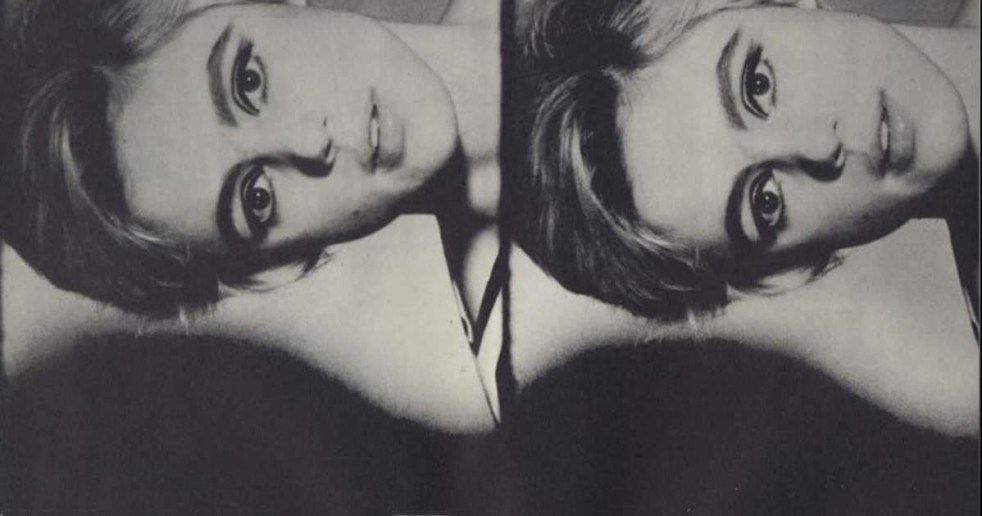
For the life of me, I can’t remember why I went looking for Edie–only scrolling and scrolling through images of the same blonde waif. Cigarette in hand. Ribs I could count. Romantic in the same way a graveyard would be–only if I didn’t really think about it. 

Her name carries the fantasy of her fame-fed silver spoon. Images of her life as a muse to Andy Warhol and Bob Dylan blot out the addiction–the depression–the abuse. The anorexia. 

Ms. Sedgwick was “poor little rich girl” to those who couldn’t touch her–change her–shake the ground she danced on. The life given to her without her consent became reason enough to withhold compassion. Her failing health and laundry list of addictions–childish. It was her fault after all, or so say those arrogant enough to call a broken woman entitled. 

Those who could have her–could touch her–didn’t hold her much more gently. She was little more than a fantasy turned possession for them–and of course she found a home here. Who else was she taught to be? Who else would we have encouraged her to be? 

When a girl is praised for harsh edges and hollowed eyes; when a girl is used, abused, and neglected by her parents; when a girl spends her life starving herself to feel safe; who else could she have been? She was trying to stay alive–to feel safe–in the ways we taught her and then shamed her for. 

We decided that as long as one had big eyes and an artistic eating disorder, being strung out was sexy. With this decision, we killed her. We killed every other possible version of Edie. Who else could she have been? 

What else but broken and starving and wasted?

Edie’s life conforms, at every turn, to the plot of a tragic romance. Tragic because she died at 28, but oh so romantic because she was beautiful. Right? Oh, but that doesn’t feel right, does it?

Never has there been an uglier sentiment than: Her life was so sad, but, wow she was so beautiful.

Graveyards aren’t for romance, dear reader. 

They’re for respecting the dead.

We Need To Talk

“Is it okay if I talk now?”

My mantra for twenty-two years. How messed up is that? How horrifically sad.

If this pandemic has taught me anything, it’s that you must speak when you feel passionately. Always. Silence out of fear is no good–in fact its harmful and it feels, well, bad. Really bad.

I have a habit of letting words build. It reaches a point–not much different than the edge of the Grand Canyon–where I’ve been silent for so long that the urgency to speak comes out at an angle. Misdirected. Skewed. Never in the way I want. This is a big part of why I write, and also why I am absolutely oozing with chaotic energy most always.

I mean this not as an excuse, but more of an admission of a pretty gnarly flaw of mine. So learn from me, and instead of looking the canyon in the face, I encourage you to speak.

Don’t get me wrong, think first. Please, solidify your thoughts. But when you get there, instead of swallowing them, speak.

If you don’t, the wrong words will come out, simply because you have no room in your hands left to hold them.

I love you dear reader.

Talk soon.

Am I Boring Are You Listening

I often feel like the ambient music of people. This scared me for a while–“boring” is death for young women.

An ambient-music-person, who makes everything slightly more pleasant, but whose absence goes unnoticed. This was me. Calling no attention–making conversation for others easier, simply by being neutrally present.

For so long I didn’t want to be this; I wanted to be loud and impressive and captivating. Always. But God.

There’s artistry here, in the ambient-person, if you listen. If, with intention you turn an ear, you can hear that we have been meticulously crafted for this moment. That we aren’t bland repetition but something made to hold space for thoughts–to encourage creation.

Soft encouragement–holding space for people–these are the things in this life that bring me the most joy and satisfaction. I will proudly accept an ambient presence in your life, dear reader. I will do this so happily.

All this and still, when the metaphor ends, I am a human woman with a voice and dreams and an ass that won’t quit.

All this and still, the very nature of writing means that I am demanding attention–that with intention I am bringing something new into the world. I am, at once, the space, and the loud, fist-pumping anthem.

There are ambient-music people in my life too, dear reader–those people who exist in my space with love and encouragement. But they, too, take up glorious space when they choose into. They aren’t neutral, but fluid–and thank God for this. We wouldn’t have artists otherwise.

The flaw in this metaphor is that we constantly change–make choices. The way I exist in one space does not dictate how I exist in another.

Dear reader, it’s both.

It’s always both.

Take care, sweet reader.


Bite Back

Today, dear reader, just like every other day for the past two weeks, I went for my government approved, once-daily walk.

God, I live for these walks. Most days this is the only way to justify leaving the house; I can be six feet  from every other human, while finally breathing air that hasn’t already past through my lungs thousands of times.

I can move my body in a way that isn’t cringing in fear from some terrifying serial-killer TV show.

I have been living for these walks. There, I can think.

Today, however–this walk was not one for joyous self-discovery. No, no–today I walked quickly and kept my eyes down, writing furiously in my head while trying to solve a problem to which there is no end likely.

I didn’t solve the problem, dear reader, but I did think of a way to break even.

You bite back.

There is a difference between admiration/appreciation and objectification. This is not a hot take, I know, but stay with me here.

It is important for me, dear reader, that you know this issue is not one of sensitivity, but of ethical behavior. Compliments, even from strangers–hell, even from strangers twice my age–don’t scare me. It is in the objectification of my singular and struggling body that makes me reproachful.

There is a difference, and the difference is what I’m left to hold when the stranger walks away.

*What follows applies to random encounters, usually with strangers, and is based on my experiences.*

I feel no need to  reproach a stranger when they give me a compliment, or makes a statement on my appearance that feels benign. I nod in thanks or give a smile, but don’t feel the need to do anything more. They keep walking, and so do I. Uncomfortable though it can be to receive praise from strangers, I don’t feel the ickyness that comes with getting catcalled.

I’m not sure if I can articulate where exactly the line between benign and perverted is, but I believe it depends on the intention of the speaker, expressed through intonation of voice, word choice, and the context of the encounter.

“You are so beautiful” — a stranger walking by in a grocery store, who smiles, and moves on. Benign.

“Wooo hey sexy mama.” — someone twice my age passing by on a creek path, who stops to watch me walk away. Perverted. 

See, the line isn’t really that foggy at all. In fact, it seems to be clear as mfing day. I struggle to draw it so definitively though, because the semantics here are tricky. People are quick to call a person “over-sensitive” or “touchy” for using words like “creep” or “pervert” when speaking of an encounter like this.

The fact that someone, in broad daylight, called me “Sexy mama” and watched me walk the length of an entire block, isn’t shocking or bizarre, but unsurprising–even unoriginal.

I wouldn’t have given it a second thought; I would have brushed it off like I always do, but today, of course, was different. After he yelled–this man twice my age–I saw the look on a woman’s face a few yards away, who had seen this all go down. She came to a dead stop, and stared at me with eyes wide and mouth agape. She was truly shocked that this kind of comment could be thrown at me so carelessly. And that I hadn’t even bothered to react.

Suddenly, this made me unbearably sad. It made me sad when I realized that I had no reaction to something that in so incredibly disrespectful. Would I not have seen the shock and pity reflected in this woman’s face, I wouldn’t have even blinked. But for better or worse, I did. And I was furious.

Not only did I have this man’s words to carry, but now I had the memory of this woman’s face–all shocked and hurt–scared for me in a way that I wasn’t scared for myself. This was too much to forget.

For the remainder of my walk, I thought about what I would have said if, in that moment, I had felt important enough. I would have clapped-back.

For you, dear reader, I have compiled a short list of my favorite one-liners that, if delivered appropriately, will allow you to bite back without putting yourself in danger. They will be funny in a satisfying way for you, and shocking to the stranger.

It’s important to note that if you are in a situation where you are completely alone, i.e. not in public, or it is after dark, it may not be the best time to use these. Also, if you are under the age of 18, this is a different issue, and should be addressed as such. Please take care of yourself in the best way you can, while removing yourself from the situation.

But if you are in a place of relative safety, as I was, in your twenties, as I am, these will work, I guarantee.

To maximize effectiveness and minimize risk, these clap-backs are designed not to provoke, but to teach a succinct lesson. During and after delivery, it is important to keep moving–do not invite conversation. Imagine this is your mic drop–say it while in motion–and ride the high that follows.

Okay, now with the technical stuff out of the way, we have come to the portion this rant where I get to be funny. The following are effective clap-backs when faced with an encounter of the perverted variety.

**Remember, these are designed to be shocking, but not insult, to keep you out of harms way.**


*turn and look behind you* “Did you hear that, dad?!”

“I don’t speak English” *spoken in perfect English*

“Thanks, it’s my 12th birthday”

“Yeah! And I’m only in my second trimester!”

*hand to stomach* “I know, right! It’s twins!”

“My psychiatrists thinks so too. All 10 of them.”

“Right? Thank god I got probation.”

*Turn your hand into a puppet and address it* “Did you hear that, Stanley?”

“I curse you with the fire of a thousand suns” *wild hand gestures*

“I look great for 85, no?” *hold your back as if you’re old af*

“God is watching” *a miniacal laugh wouldn’t hurt*


Alright that’s all from your friendly, neighborhood gal. I love you, dear reader. Be safe and well.
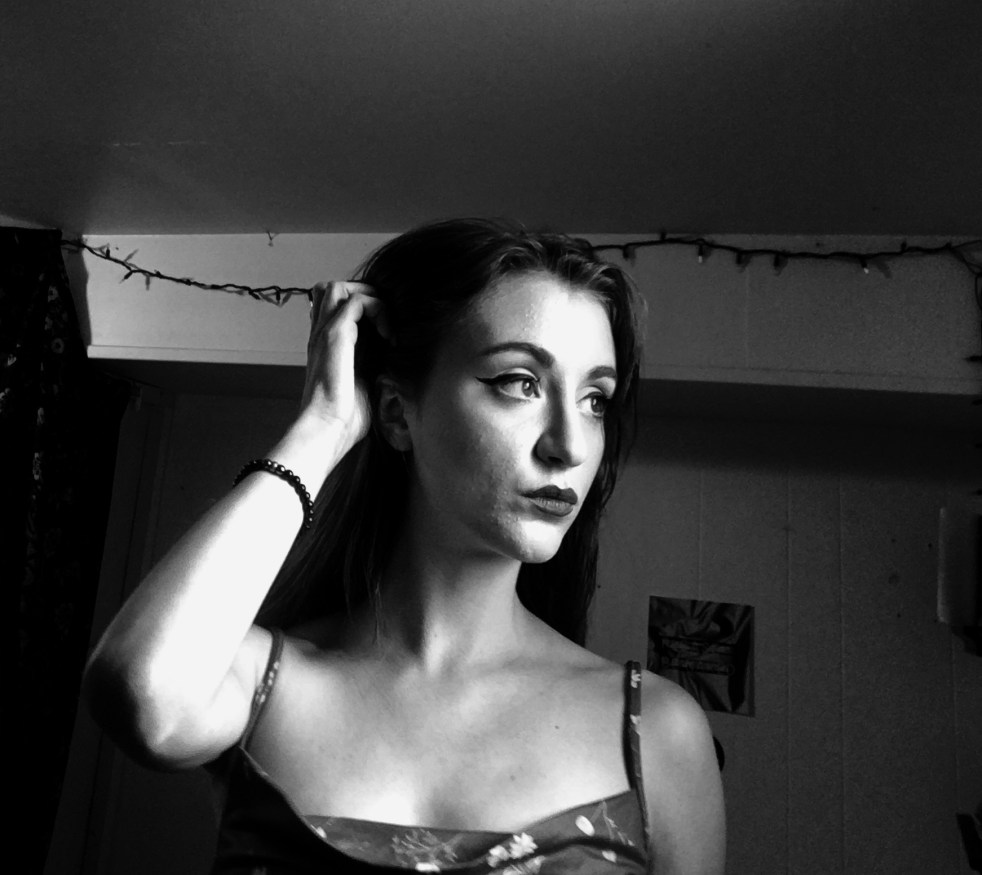


Thoughts From the Floor: Quarantine Edition

I’m scared dear reader. And my stomach hurts.

I have just watched no less than 6 consecutive episodes of the show “You” on Netflix. Though I started feeling kinda iffy about this “Joe” character about 30 seconds in, I was too intrigued, and frankly, too bored to stop. It is now 3 am and I am thoroughly disturbed.

So now I am invested, body and soul, in this icky story. It’s about a serial-killer and his writer-girlfriend who, by the way, writes really shitty poetry. She should really work on that. And on not dating serial killers probably–but hey, one thing at a time, girlfriend. You find those slant rhymes.

Having already taken two walks, finished a book, had online class, and taken some really contrived photos of myself  (some of my best work) I could afford a little TV time. So I sat in rapt attention with this horrible, disgusting, addicting show, all night. And yes, I am ashamed. 

With both hands in the popcorn bowl, I fell into this disturbing narrative much too quickly. Boy meets girl in a bookstore–easy. Boy goes absolutely batty and suddenly there’s blood everywhere–not so easy.

So, in short, I need a palette cleanser. Something to douse my brain with positivity–or at the very least neutrality.

I have decided that for your reading pleasure dear reader, and mine, I will delve yet again, into my twitter drafts. This is home to some of my most treasured comedic triumphs. The world wasn’t ready at the time they were composed, but the world is different now. Scarier. I believe you are strong enough to take them.

Maybe after a quick visit to a constant barrage of thoughts suitable only for the witnessless void, I can get off the floor and stop debating which acquaintance is trying to kill me.

I wonder how they’d do it.

It’d be with a hard covered book, no doubt.

Wait no. Stop. Delete. Don’t get any ideas. Read the funny drafts and forget. Shhhhhh. That’s right. Laugh away the plotting.

Here’s some drafts to enjoy:


“Secret big-boobs”

Hats off to you, emo boys. You needed a new beanie anyway.

Listen I’m doing karaoke alone in my bedroom and having pageants where I crown “miss cereal.” How do you think things are going?

Kiwis, though delicious, are not cost effective. It is for this reason that I will always choose the truly inferior grape.

Overheard: “I recently heard some really great things about Nebraska”

And at the end of the summer the world hadn’t changed, she had changed–or more accurately–she had seen phish twice.

A memoir with street performers. A “mime-oir” if you will.

I am a slut for me (made with autofill)

Wow what a string of horrifically bad decisions I’ve made. Better lay on this bed with no sheets next to this window with no screen to think about that.

Every red flag and still we ride.

I pet a cat named Ernie today. 2 minutes in he rubbed his head on me. Now I call him Ernesto.

My mom fell asleep watching a movie with me, woke up suddenly, whispered the name of our optometrist, laughed, and fell back to sleep.

Sometimes I hear a plane outside and assume it’s a snowplow. In the summer.

My arms hurt will you hold this dialectic for me.

Overheard: “but how STRONGLY does he feel about the doorbell??……. That strongly, huh.”

Start humming the Rugrats theme song and it will turn into “Y’all Ready for This.” Just try it. Trust me.


That’s all for now sweet, beautiful reader. I hope you have gotten up from whatever hard, flat surface you’ve been laying on.

I love you. Stay home, please–if you can.

Be safe.


Quarter-life Puberty

For the entirety of my life as an adult woman, I have had the body of an androgynous prepubescent. I was simply straight lines and sharp edges–waifish and hollow to the point of asexuality. This was a convenience in every sense other than physical well being. Osteopenia and lack of white blood cells were merely logistical necessities when faced with the horrifying possibility of having a body that curved. I was a neutral being in a world that craves something to grab–to claw at. 

I am 23 now, and going through what I have deemed quarter-life puberty. This wonderfully awkward process is very much real for those of us whose aversion to inhabiting a body has led to clinically diagnosable relationships with food and exercise. Though not necessary for the diagnosis or self-destruction caused by any of these disorders, Anorexia, Bulimia, Orthorexia, EDNOS, ARFID–disordered eating–can lead to a body quite literally behind the curve. 

The past year of my life has included more food than I previously thought could fit down my throat and into my god forsaken stomach. My body, bless her, has grown in ways that make me look feminine. It’s been beautiful–I do not deny this. I am learning as an adult what many learn in adolescence–or sooner: how to inhabit the heartbreakingly soft body of a woman. 

Gorgeous as it is to have a body capable of producing life–of keeping me safe and warm–it is, in equal measure, dangerous. Instead of habitual movement, my evening walks have become more of a practice in risk taking. True though it is that my own body-awareness causes more fear than actual aggression, there exists a fear I cannot bury.

Last evening a man walked by with a dog–I nodded politely and he returned the gesture. There was nothing to fear–a completely normal interaction. But when he turned and ran in my direction, the world was on fire. I gasped, stumbled, and prepared to run. I knew cold-sweat fear–I could no longer breathe. Only a moment passed before I saw the tennis ball his dog had been gnawing on rolling towards my feet. The man grabbed it, apologizing profusely for scaring me, and continued his very normal stroll. 

I was confused, scared, and disappointed in my own judgement of this man. I realized though, that there was nothing that I could have done to curb this fear, save staying home. It was my softness that scared me. I was no longer comfortable in the safety of straight lines. It wasn’t other people in the dark, but my lack of neutrality that scared me.

I don’t know if time will heal this, dear reader, or if one gets used to it. I didn’t grow into this, but found myself in the middle at 23. I am proud and scared of my body in equal measure, and feel that maybe this is one of many common ailments of being a woman–fear. 

I love you, dear reader. Take care.