Wear a mask and don’t be an asshole.
love you.
Wear a mask and don’t be an asshole.
love you.
It’s dark out there. We are all hurting–albeit to different degrees–and still we feel completely alone with our grief.
Our inability to be heard in a way that would bring any kind of lasting, or even immediate change leaves us feeling helpless.
I would argue however, that we have the capacity to be less alone now than we did in February, when we had the option to turn away from death and force. Try as we might, we can no longer choose blindness when faced with our collective pain.
So now, here’s a question for you: what do we do with this?
The disconnected state that was possible pre-pandemic was, and remains to be, a horrifying display of apathy.
This unemotional state is not a single individual’s fault (although *cough cough big baby*) but is made necessary by the system we rely on to survive.
And yeah, dude of course I’m a socialist I’m 23 and I have a brain.
It scares me that even now, when presented with real-time images of deeply racist America and a thousand preventable American deaths reported every day, helplessness seems to be more common than empathy–than compassion. But I get it. To feel empathy is enough to motivate action, and action right now feels impossible. Helplessness–uncomfortable as it is–seems easier.
But it isn’t. It isn’t easy to turn away from human suffering. If you’re honest with yourself, if you’re listening, it isn’t easy at all.
Connection is possible. Always. There is never a time when it becomes too hard, or “not worth it.” Compassion is the most valuable weapon we have, and this is the hill I’ll die on.
The voices we need to be listening to right now are the ones asking for help–not always so plainly–but through telling their stories.
Talk. Keep talking. Listen. Ask questions. Don’t allow the feelings of helplessness to keep you from connecting with people’s pain. Please.
It isn’t as easy as it seems to live in apathy, I promise you.
Connection is everything.
You’re not empty, and you’re not helpless.
I love you, dear reader. I love you so much.
Guilt! Let’s talk about it!
C’mon it’s not that scary. I joke about my horrible-decision-packed past all the time! I honestly think it helps me withstand the memories.
Joking isn’t the lack of ownership or responsibility for the horrible things I’ve done, but a way to speak about it without putting too heavy a weight on whoever’s listening. A win-win? Eh. At least a laugh and a sigh.
So yeah, joking about stupid decisions from a new place–one where you can look back honestly–isn’t a sin. If you consciously and consistently choose to act differently these days, a little ha-ha is a-okay by me.
Now for a secret.
Dear reader, I am not a saint. I know, I know. Deep breaths.
I used to regularly hide food, pretending that I ate it so as to get out of a few hundred calories. I called a dietitian a “frigid bitch” to her face. And meant it. There was something called “the spaghetti incident” which is still too tender a topic. Objectively, all funny.
Here I sit with new tits and an ass that can’t quit, and the fact that my butt used to look like two deflated balloons is hilarious to me. Like, you could lift up a cheek and it would float back down like a feather in a light breeze. Remembering how I let myself get to that point–guilt. Talking about how easy it was to wipe my ass back then–hilarious. It was like brushing something off my shoulder. I exhaled and my asshole sparkled.
On a bit more serious of a note, I used to be reckless–not caring about myself or my body for more than 5 minutes at a time. My sense of importance would fade and I would be, as they say, back on my bullshit. I made a lot of bad decisions outside of eating disorder stuff too.
Guys. I dated a MIME. A RUDE DISRESPECTFUL MIME. Though incredibly briefly, if that is not indicative of the absolute chaos I created until age 20, I don’t know what is. Fuckin mess.
Jokes aside just for a moment, I think being vulnerable with guilt is incredibly brave, even and especially when addressing yourself. This isn’t a hot take–I know that–but it’s incredibly difficult in practice. I’ll laugh at myself all day long, and then write something incredibly sad when I’m filled with shame at 3 am. Both are honest. Both are necessary.
So, having already made the asshole jokes, it’s now time for the vulnerability. Here is something you didn’t ask for but are getting anyway.
I wrote it at 3 am. It’s about being a dumb kid from the eyes of a slightly less dumb adult.
I didn’t give it a title and am open to suggestions.
I realized I was just a child, then. That I didn’t know the things that would make the choosing easy.
that I didn’t trust myself to carry my own weight further
than the door frame. Bouncing between the good and the careless and the careless good and all of it tasting
like all the rest. I stop to count again the tallies on the back of my hand.
I stopped after five horrible things.
when the lines crossed back over the past, they got longer–eating the land
my mother set aside for me as a child–then sealed to the world and to me, who was cause and effect and affected by none of it. skin
became canyon, as if asked to open wide. now fixed
to the looking I no longer want to fill, but to gauge the time.
I look not for salvation but for the end of all the choosing.
one final horrible thing. to truly see the damage and to sleep
with the weight of it pressed flat against my lips.
a mirror to watch my eyes close.
Well that was dark. Um. Go back and read the butt stuff again if need be.
Dear reader, take care.
Big love. Just an absolutely obscene amount.
Her writing found me feral in an empty college dorm room. I was starving and alone–both of my own volition–trying to be a writer, or at the very least someone worth knowing.
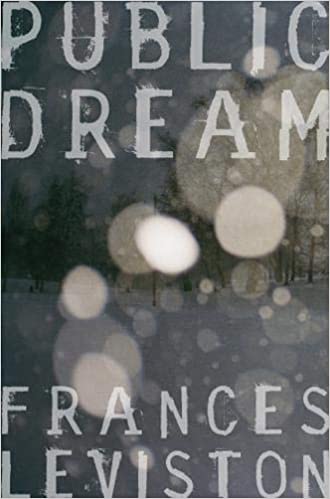
No writer has affected me quite as much as English poet Frances Leviston. I heard her voice before I read her work–this is important. At the time, the voice in my head was both unkind and unwilling. But her’s I could listen to.
I was looking for free poetry. This sounds a bit shady, BUT I found recordings of readings given at various Ivy leagues, and felt justified. I thought I was angry at elitism, but I was probably just jealous. Anyway.
I picked a few at random and tried to wish away my body. This is where I found her.
Ms. Leviston read several pieces, all of which could be described as–well–experience? Her work isn’t familiar the same way bubble-gum is; her poetry isn’t something to quote or tattoo, rather the feeling is one that has bitten your neck before.
Her work pulls at your memory. Primitive in that it touches your beginning, prophetic as it shows you your end. Not “the end” but yours. Does this make sense?
After reading her work, I felt similarly to how I feel after hearing someone has died young: yearning unfairly for someone I didn’t know. Grieving because it is all there is.
Let me show you.
In Scandinavia, the final piece in her first published book, Public Dream, the passage I played and replayed until the words lost meaning reads,
“I could try
to live as a glass of water, utterly clear and somehow
restrained, a sip that tells you nothing
but perpetuates the being there…”
The Gaps, from the same book, cannot be properly segmented. Reading this piece, or hearing it as I did, is an experience I hope you seek out. It is my favorite poem, full stop.
It’s about the space between. Again, full stop. The Gaps dances around the idea that solids are not solid–that you can look at a forest from the road seeing only trees–that a creature inside could look back, seeing all of this and light.
I bought Public Dream some years later.
Dear reader, thank you for listening. I don’t send my favorite books to people anymore, as I never used to get them back. But I still wanted to share this thing I love with you; I hope that’s okay.
Love, always.
me
Part of the shit that keeps me from sleeping through the night is that I can’t make my past feel like mine. It seems like it happened to someone else–someone I knew or read about. There are too many cloudy days to remember what eactly was my fault–what I should punish myself for. So I pretend it didn’t happen.
None of it matters because it wasn’t me.
And this is true, to an extent. My brain was a different brain–think fried egg. Lots of sizzling. Very little talking. Just a fuckin egg, man.
This is why I write so much about it. I don’t call back my hospital days until I sit down to write. It’s here with you, dear reader, where all bets are off.
I’m hoping that one of these days, I’ll read through some of these and think, “what a strong girl.” For now, I’ll scream into the void until the echo comes back laughing.
Here’s a follow up to my previous post. Just over 2 years ago. And I couldn’t be further from the girl you’re about to hear.
Regardless, here she is.
We only had crayons in the psych ward. Pens were dangerous. I used a stub of Crayola–Purple–because it had the sharpest tip. What I wrote is almost indistinguishable, but the general idea is that I was scared. I was wearing blue paper scrubs and two french braids. I had not planned for this; I had work at four.
I had been waitressing at a steak and seafood restaurant for three months, and was making decent money. If I made less than a hundred in tips, it was a bad night. I liked this work. It was terribly stressful and physically demanding, but I could spend eight hours doing what I do best–smiling and talking and moving. All without feeling anything.
Customers–patrons–whatever, would passively comment on my body. Waifish, hollow, 12 year old boy. This is what I looked like. I was a twenty-one year old woman, and I weighed less than I had in fourth grade.
I had to use my entire body to lift a tray of bloody meat and shrimp. People would offer to help–customers–and sometimes I had to let them. My body hurt every night. I loved it, though; I didn’t have to think. I was supposed to be there at four.
My coworkers were nice enough–lots of pretty blondes and one guy with long hair who always smoked in the walk-in. The cooks bordered on unsettling, but that was fine. I tried a couple dates with one of them, but he liked hunting and bad music.
Customers liked me–especially when I wore my hair up. They called me cute and tipped well. Who was I to look like a woman?
That morning–the psych ward morning–I had an appointment with my psychiatrist. In order to call a psychiatrist “my psychiatrist”, and to see them every week, one must demonstrate some pretty significant instability.
I called her Stacy.
For a while that summer, I saw her every day. It was bad; I knew this somewhere, but I couldn’t make it matter.
Admittedly, if I had to see her daily, I shouldn’t have been working as much as I was. But I was so good at pretending. If I didn’t work, I’d have to be with myself, and I couldn’t have that. On days where I didn’t work, I laid in my childhood bed. I swang on the swingset in the backyard. I took long, scorching hot baths. It was the middle of summer, and I was twenty-one. I should have known something was coming.
For over a year I met with Stacy, and during that time she tried to make sense of me–she couldn’t–so instead we tried Zoloft. Then we tried Remeron, Cymbalta, Prozac, and Zyprexa. Then we tried Zoloft some more. A chemical experiment brewed inside me, and I felt solidly indifferent.
Short, black, curly-haired Stacy spoke to me like I was standing on the edge of something. Every week she weighed me; every week I was forced stepped onto the scale backwards; every week she was terrified. I remember almost nothing from our meetings other than at some point she switched offices, by which time things were not looking good.
This morning, just like all the others, I went to her new office, which incidentally was in the same hospital whose psych ward I would be admitted to in just hours. Just one floor below the scale, one floor below her worry and my silent nods, my fellow scrub-wearers paced and slept.
Stacy had the power to put me there, without warning, and this was news to me. There, I would be legally kept until a team of doctors decided I was no longer a danger to myself.
The appointment was at ten a.m.. Stacy had asked my mom to come, which should have tipped me off. When she knew I needed help, when she knew I couldn’t hear her, she called my mom.
We sat across from Stacy, who was, “very worried.” My mother, terrified and tearing, agreed. The door opened and the hospital’s head of psychiatry came to sit beside Stacy.
My stomach felt something other than empty. I thought this might be fear, which was odd. It had been months since I’d felt something.
Words were coming from everyone, but I remember none of them. I only remember being confused, then like my chest was being ripped apart. My mother had started sobbing. Somehow I ended up in her chair with her, clinging to her neck. I was scared. This was fear.
“You will die if we let you go home.” The head of Psychiatry said. His name was Dr. Raj. He said he had been following my case for a while, and had watched my decline.
I had been in treatment twice by this point. Stacy had recommended every week for months that I go back for a third try. She made a point to say it during every one of our sessions, and I always said no. I refused to go willingly. They’d have to let me die first.
“When something happens, we’d rather you be in the hospital.” Dr. Raj said “when” not “if”. “When something happens.”
I wouldn’t go to the psych ward–I told them this.
“If you decide to run, we will send the police.”
I was carted to the ER in a wheelchair, where I was told to strip down, and take paper scrubs into an unlocked bathroom. Shame. Fear. Numbness.
My father was suddenly there. So was a turkey sandwich, which I was expected to eat. My mother and father sat together in my hospital room, silent and pale and tired. I had a blanket and a plastic pillow. I looked at the two people I loved without reservation, and knew guilt. I was sorry. I cried. They cried.
I was dying.
But this fact felt as real as their love for me–I didn’t deserve to believe it.
After two, three-month stays in treatment, I was here again, in a hospital room, feeling guilt, and then suddenly nothing. How could they love me when I wasn’t even there?
My parents left to pack some of my clothes–nothing with strings. This was the first of many rules I would be expected to follow on the third floor.
I was alone then with a nurse who was asking me questions and scribbling furiously. After her pen stopped, she told me they were ready for me. “Let’s go, then.” I hated the ER.
She took me into an elevator, which I never used. I told her this. I told her I had been afraid of elevators since I was eight, but she chose not to hear me. I was just another psych ward patient; she saw them everyday. She chose not to hear me. For some reason this was more real than the paper scrubs; this meant that I was crazy. She chose not to hear me.
I was eight when I decided to be thin.
By this time, my town had already died and was beginning to decay. One of two large factories had closed, and people were escaping in hoards. My family stayed because my father was a teacher. Lucky us.
I lived in New York, but nowhere, really; a heavy-aired valley drowning in its own excremental offspring. It wasn’t the city. Not the gorgeous suburbs or the Adirondack Mountains. Not a place where celebrities went to rehab. North of that. The Northernmost tip of our glorious Empire state.
I could see Canada from my grandmother’s house. It took less than ten minutes to get to the border. Think–North.
Winter lasted from late October to early April. More than five months of winter, and people were heavy. But not me. Not us kids. We were scrappy and cold-nosed and tightly bound. There weren’t many of us and so we clung together like sisters. I was closer to them than my own sister–the friends who I would eat dirt with and hide beside for hours in the dark.
We lived on a hill that you could go straight down and end up at the top without turning around. We could lay in the middle of the road for an hour without getting nervous.
When I was eight, I learned what a calorie was. I learned to read the labels. I started turning the box of gogurts in the freezer around so I saw numbers instead of food. After school, I stopped eating after one mini muffin. That was enough.
I learned how to wrap my left hand around my waist to measure myself. I learned how to hold my left bicep with my right hand to gage its thickness. I started only looking in the mirror sideways.
Less was fine for me. I didn’t need that much–less than my sister, certainly. Especially because she was so smart and pretty and athletic and preferred by everyone who seemed to matter to me. I didn’t need as much as she did. I could be small and thin and she could have all those other things.
When I was eight I decided to be thin. And it was an incredibly successful distraction for so, so many years–
When I was eight I realized that when I died, it would be like a dreamless sleep. That this would be forever.
Under the covers, I imagined all the ways my body might give up. I saw myself peeking–somehow lucid–from my grave, watching the world fade to the insides of my eyelids. To nothing.
I was scared, dear reader. And I didn’t know how to live with that. So I did the only thing that I knew with absolute certainty I could control.
We find the things that soothe us and we hold on tightly. Without grueling adaptation, a lot of help, or perhaps rock bottom, we hold on until the bitter end. These things look a lot like sickness–they become disease. It is the clinging, the rigidity with which we hold our vices above our values that can lead us down these very scary roads.
Fear, it’s usually fear of something.
So, let’s talk about it. Let’s talk openly and often about fear. About death. About our bodies. About what it is that makes us want to numb–to hide.
Tell me what you’re afraid of, dear reader. I promise to do the same.
There are things I do not do, dear reader, and there are things I do not do well. This venn diagram was more a circle for the majority of my anxious, self-critical young adulthood. Just fuckin not doing stuff I couldn’t do REALLY well.
This way of life left me with very few hobbies–I just wouldn’t do anything that didn’t come naturally and immediately. So, when I wasn’t studying obsessively, starving myself, flirting, writing really obscure metaphors, or doing winged eyeliner, I wasn’t doing much of anything. Oh, maybe getting drunk and fucking myself. I did that a bunch.
That reminds me that there is also a collection of activities that I am very good at that I try my best not to do. Disappointing my parents, blacking out, stealing cereal from my roommates. These are more shameful and less indicative of personal growth–we won’t focus here. it’s just sad.
Now, not doing stuff I wasn’t immediately good at, but then trying it and loving it. That’s a wholesome topic.
So, sucking dick.
I was truly afraid of not sucking dick like a pornstar. Thank God I got over this, honestly. Plus, those women are all goddesses and God fucking bless them–they give angles super condusive to learning, and we should all aim for this level of selfless skill-sharing. Zero sarcasm.
And so the butterfly spread her wings, and sucked some dick. (Dear God I hope nobody in my family reads this. Maybe don’t read this blog anymore if I’ve ever seen you on Thanksgiving.)
I picked up the ukulele at 22 and Jesus Christ a year later I’m still just so bad. But I love it, and I do it every day.
I’m teaching myself chess at 23 and have lost 13 consecutive online games. I loved every second.
I’m trying to be friends with women my own age! Horrible, just really really bad at this. But! I did manage to find my sweet bean of a best friend this way. Though we were terrified of each other for the first month of our acquaintanceship, we now sit on the floor and cry together.
I allow people to like my body. Ooooooof this one is TOUGH. But! I do it and it feels, um, really really nice.
Karaoke. Bad. No good very not good bad at this one. So damn fun though–especially if you suck. NOBODY wants a musical theatre major up there. That’s just such a bummer for everyone and the root cause of karaoke-bar blackouts.
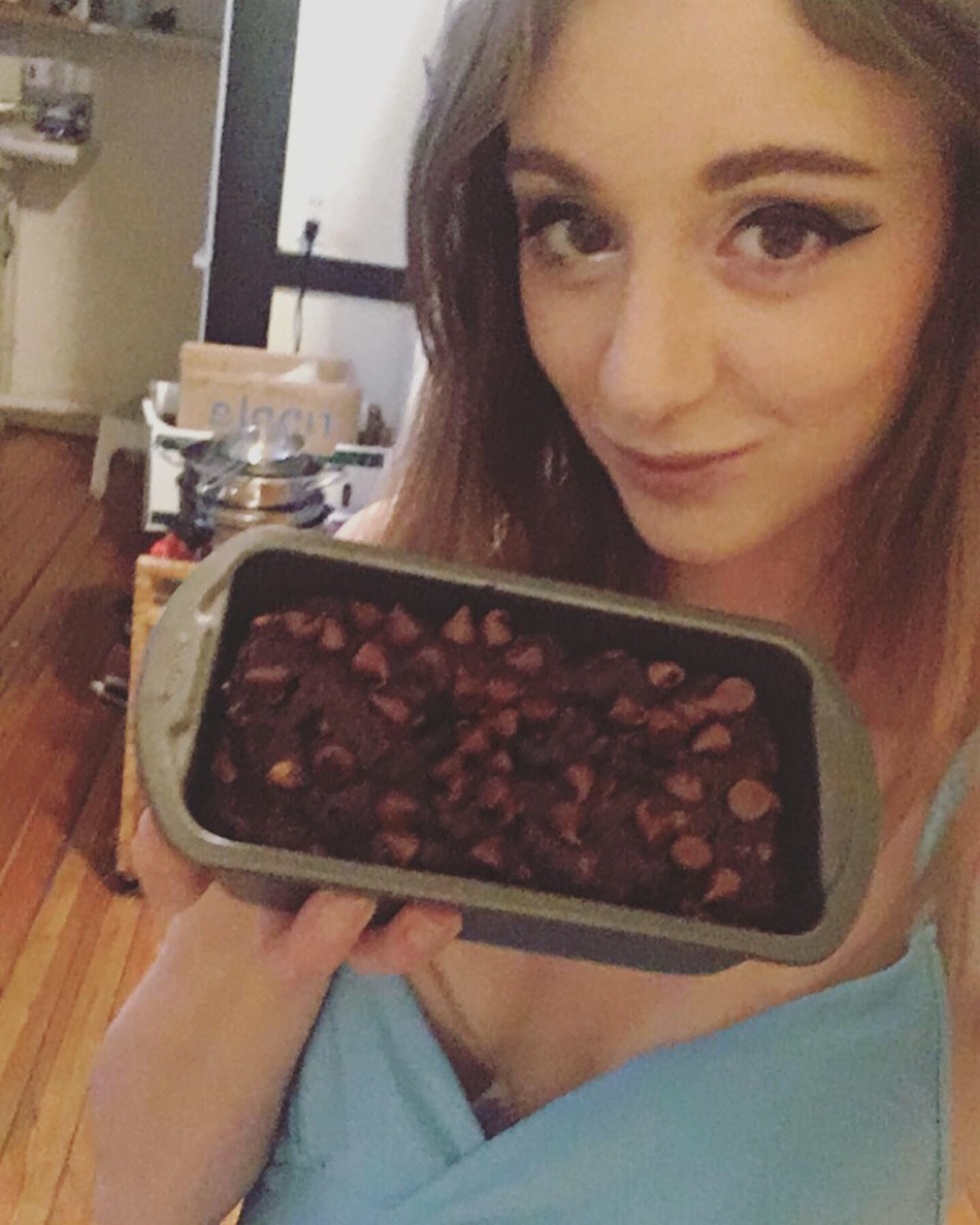
Baking. I’m still pretty bad at this, but I used to be much worse. I love it even when I burn shit or it tastes like rubber. Cause fuck all look I made a lil loaf! So cute.
Communicating without being too emotionally honest. Still bad at this, but getting better. This one’s just a growing up thing. Also counterintuitive to the way I communicate via my writing.
Phone calls to people who haven’t seen me naked.
Ordering in other languages at restaurants.
Drinking Gin.
Doing bits at parties.
The circle is now a venn diagram and life is a heck of a lot more interesting.
Do this if you can, dear reader. DO IT AND YOU’RE COOL.
Love you bigtime.
I’m scared, dear reader. I’m scared and the world is ending and I feel like apologizing for the bad things I’ve done is stupid and shallow. But I’m gonna do it anyway. You’ve got to start somewhere, and the end is as good a time as any.
Though I refuse to wait until a meteor is on a collision course, or Yellowstone finally gives, now is close enough to the end that I feel the need to apologize with some urgency.
If apologizing is easy, you’re doing it wrong. This isn’t to sound harsh or self-righteous, but to remind myself that, until extremely recently, I operated under the belief that when I needed to apologize I could, and when I didn’t need to apologize, I would anyway. “I’m sorry” was a catch-all for fuckups and unfavorable or nearsighted opinions.
The Apology was my behavioral turning point. The apology changed things–it had finality. But, I’ve since found this to be an extremely stagnating way of living.
Being sorry is hard–it is supposed to be. Doing what goes against, or even harms something or someone is an extremely painful thing to truly own.
Regret does not absolve wrongdoing, and this is a hard fucking pill to swallow. Acknowledging that I behaved in a way that reflected my insecurity isn’t pleasant. It’s scary. It calls into question who I am, and how I show up for people.
Regret->guilt->I’m sorry. This is not the end of an apology, but the easy part.
“I’m sorry” isn’t a final recognition of my flawed beliefs and actions, it is a promise to continue looking at them–to see where they came from and why they exist in me. The goal of a genuine apology is to find a way to exist in the world without that belief, without feeling the need to act in that way.
And so after the “I’m sorry” comes the sitting with myself and the acknowledging that I am not perfect, I will never be perfect, and that sometimes I act like a complete asshole.
Insight like this, though important, doesn’t make it “okay” to act like an asshole, but it does serve as a promise to make choices–consciously and consistently–to not be an asshole.
Let me make this less theoretical for a sec–humor me if you can.
I am incredibly insecure when it comes to other women my age. I never see myself as someone who can measure up in a room of my peers. I get cranky and hostile–I act like a child because I feel threatened. “Threatened” is the word–though it sounds odd. The threat isn’t physical, but instead it is the threat of embarrassment, feeling inadequate, being rejected, failing.
In these situations, I act like a child. I’m immature. I’m rude. I’m unkind. I act like an asshole.
And I am genuinely sorry for this. I’m sitting with it. I promise to do and be better. But it isn’t enough to say this, and actually, it is important to not continue saying this. Being patient and living into an apology is perhaps the hardest part. There is no instant gratification in “I’m sorry”–apologies are all about the long game. And ain’t that a bitch.
Maturity is knowing that you can and will do better, and then, without reminding anyone, doing better. The reward is that one day you’ll look at the person you are–the things you do, say, and believe–and the regret and guilt won’t be there.
Dear reader, I’ll get there.
Love and Rockets,
Al
Dear reader, it’s been a while.
Every time something funny happened these past few weeks, I wished I could have told you. I’ve missed you just so damn much.
(This feels very much like a text from an ex you’d much rather punch in the throat than update on your life, but I promise. I am far more sincere.)
I haven’t gone anywhere, dear reader, trust me. I’ve been here–literally right here in my bed–writing bits and plotting. I haven’t been sharing my writing, but instead listening to more important voices.
The world has been unkind to far too many people whose voices are, more often than not, drowned out. I hope you’ve been listening to them. I hope you keep listening.
In the midst of this pandemic/justice war, poetry feels unimportant–especially my poetry which rides the line between a fever dream and sleepover gossip.
But.
In a world of real-life villains who are much harder to understand than any lofty metaphor, poetry is where I go.
So I wrote this poem about borrowing.
I have a really gnarly habit of forgetting I’ve borrowed something, then being too scared of the embarrassment I’d feel returning it after such an unacceptably long time.
I’d say this makes me a bad person, but I feel like I am a bad person for reasons completely unrelated to the borrowing. Anyway.
This poem took quite a drastic turn when I decided that the best way to sneak under a locked door to return something you’ve “borrowed”, is to spill like a glass of water. Strap in, dear reader. It’s a weird one
I’m fond of it though. It’s been lovely to write again.
Here it is, to borrow.
rain for a borrowed umbrella
that I could leave it there–some dead night. doors locked from the inside
so that I must by some witchery leave no toe or hip bone for the dogs. a glass of water.
maybe. who spills under doors and leaves after just a while. doing well the thing water
does when left unused.
oh me. I’ll leave it where I found it but without the curses. I’ve swallowed them for you. little toy soldier i won’t let you drown. I’ll leave what’s needed and promise. when I fall again it won’t be here. where your eyes find sky and wish me gone.
when they’d call for me. those sweaty men with pointer fingers extended. you’d groan. cancel birthdays. make unsuccessful bread. have sex. again. and i’d see it all for just a while. caught in my falling.
instead I start at the end. I blow west and then west I will outlive you.
but without the tears. I will see again surely through the glass
little green soldiers. boots at the door. toy umbrella shut tight and bound by little fingers made of you. a miniature army. growing as I fall.
becoming something else.
Keep listening, sweet reader. Wear a goddamn mask.
Big love.
I’ve figured it out, dear reader–a single recipe that yields the perfect bake. Every time. Without fail. It doesn’t matter what it is you want in the end: cookies, brownies, cake, a long and fufilling life–whatever. Just follow my instructions exactly.
I’m not the messiah, sweet reader–though call me whatever feels right to you. I’d also accept “hero” “idol” or “America’s Next Top Model.” I digress.
Because this recipe is more of a catch-all, there will be no list of ingredients. I shouldn’t have to do all the work for you, my dear, ill prepared reader. If you can’t figure this out on your own, The Recipe is not for you. There is no shame in admitting defeat–just stick to banana bread and mediocrity.
If you’ve successfully completed step 0, allow me to offer a hearty, only mostly sarcastic congratulations. Now let’s begin.
Step 1.
Go to the store in search of ingredients. Do not make a list–or do, but don’t bring it with you. Buy all you can remember writing down, plus some cereal and maybe a coke or pack of gum–but never both. You’re on a budget. Unpack ingredients onto kitchen counter, stove, table, or mostly dry sink. Preheat the oven. Realize you forgot eggs. Lament this loss. Laugh it off. Take a nap.
Step 2.
If it’s still light outside, go back to sleep for 45 more minutes. Do not set an alarm. If it is dark, rise in a panic and run to the kitchen, remembering the preheated oven. With humiliation and relief, realize you never pressed “start.” You are safe. But you are hungry. You preheat the oven for real this time.
Step 3.
Prepare dinner. Remember that box of cereal you bought earlier? That’s right. No milk? No problem. Hand to box to mouth. When jaw tires of crunching, pour yourself some wine and watch 4 episodes of Avatar. When the Fire Nation attacks for a fifteenth time, remember the oven. Panic, but only softly. Reenter the kitchen to find your roommates, who have turned off the oven. Laugh at your forgetfulness. Offer them some wine. Play a board game involving a timer. Laugh so hard you cry.
Step 4.
Feel hunger again–this time, slightly drunk hunger. Remember the planned bake, and tell your roommates about it. They offer you their eggs; you humbly accept. More wine all around. You remember the cereal–you snack.
Step 5.
You open up about your struggles and dreams with your roommates, and several friends via text (half of whom respond). You feel heard and understood. You all wipe tears from your eyes, and hug each other for the first time.
Step 6.
You lay in bed. Smiling into a restful, dreamless sleep. You know you didn’t leave the oven on. You didn’t even use it. You had also forgotten the flour.
Go on, dear reader. I believe in you.

 Girl Seeking Peanut Butter